In the last few years, we have been involved in restoration work on the Elizabeth Tower and the Palace of Westminster, designed by Charles Barry, who, coincidentally, also designed Halifax’s town hall.
Shepley Engineers Ltd were our customer for the project, who came to visit us back in 2013 before giving us the go-ahead. They were already working with two other Foundries, so at the time, we didn’t expect to be casting more than a few “bits & pieces” and only be involved with the project for a year or two. We obviously did something right, because 9 years later, we were still producing castings for the roof of the Houses of Parliament.
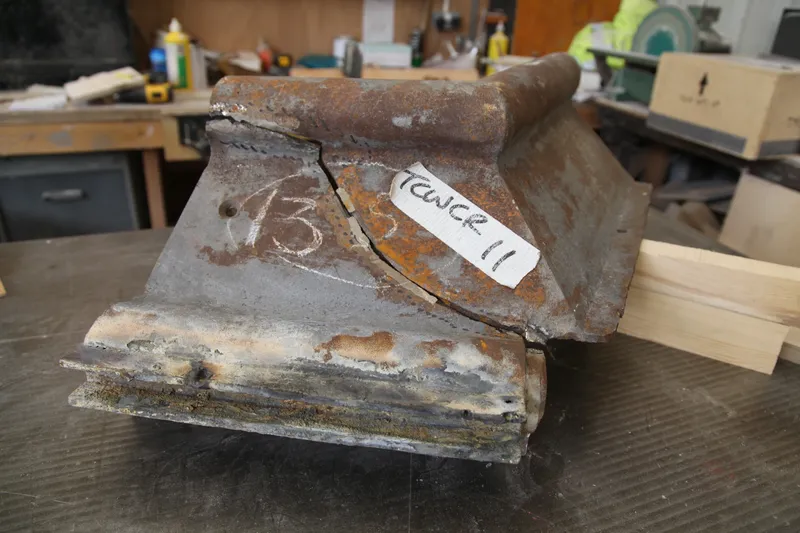
We’ve manufactured a variety of castings over the years, from dormer windows, large gutters, various finials and railings, but the roof tiles themselves are the most common to come out of our Foundry.
Damaged tiles are sent to us from Shepley to reproduce, and, because of the age of these castings (100 years +), several complications can arise, first and foremost that no two roof tiles are the same size, shape or weight.
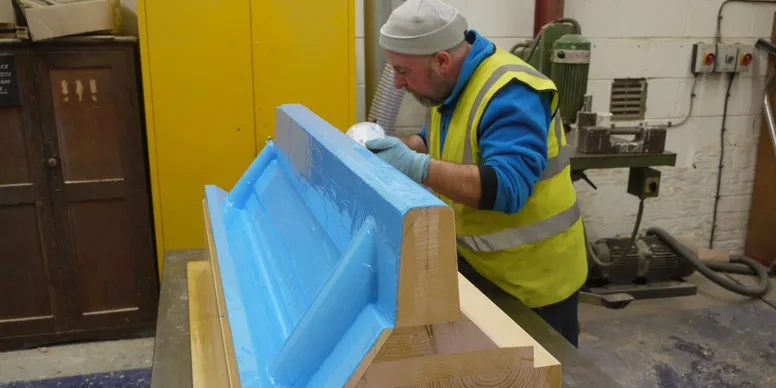
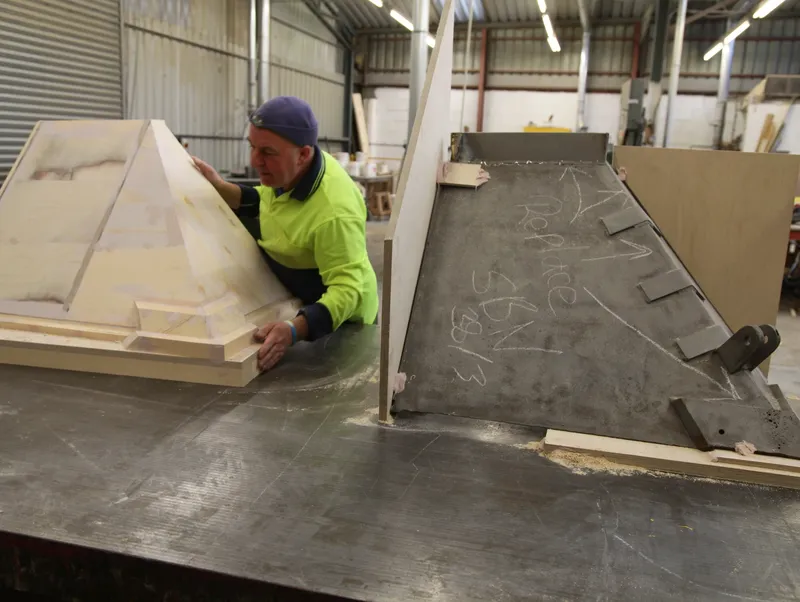
The tiles we receive are obviously not in great condition either, so rather than using these directly to cast from, we have to manufacture a brand new wooden pattern for each tile.
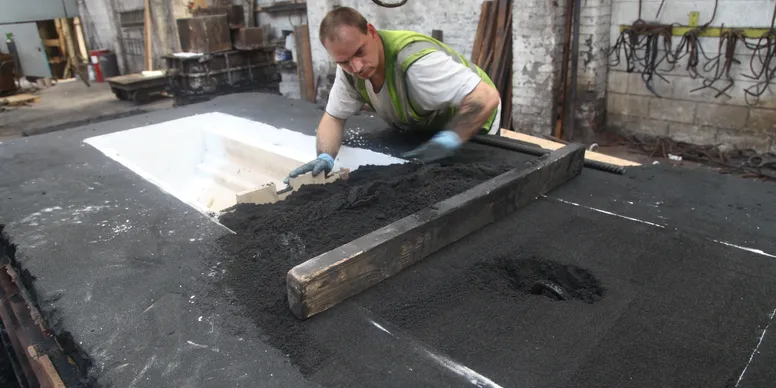
A pattern is, basically, an exact model of what is to be cast. They are traditionally made of wood, but can also be made of resins, fibreglass, plastics and even polystyrene. Once complete, a sand mould is formed around the pattern, so that when the pattern is removed, it leaves a cavity into which molten iron is poured. This then forms the casting.
The pattern making may sound fairly simple, but is definitely the most highly skilled and time-consuming part of the whole process. It may take several pattern makers 2-3 weeks to produce the pattern, while the casting itself is manufactured in a matter of hours in the foundry.
A casting can only ever be as good as the pattern it is made from.
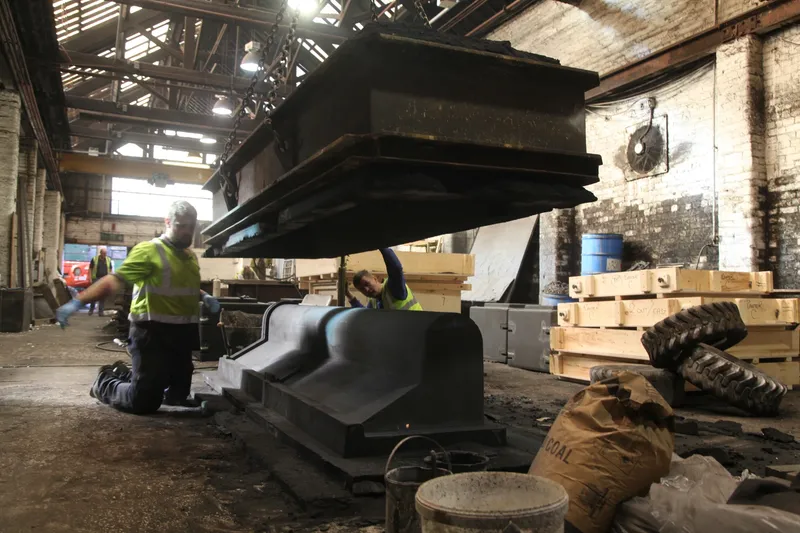
This doesn’t however, mean that the casting process is simple. Creating the sand mould is still a skilled job, and after all, we are pouring molten metal at around 1500°C, which could be dangerous if not done in a well-trained and controlled environment.
The metal we’re pouring is melted within our cupola furnace. We use 100% recycled metal, most of which is old car brake discs bought from local scrap yards. Cast iron can be used over and over again without losing any of its original properties, which actually makes it a much more environmentally friendly process than you might think.
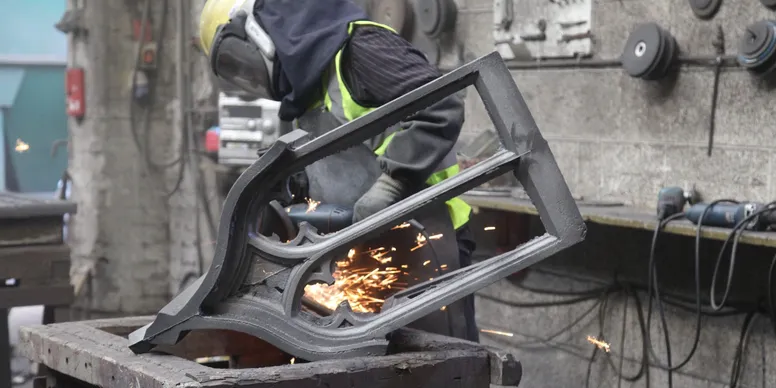
After the metal has cooled, the roof tile is broken out of its mould, fettled up a bit, inspected, and sent away to sit on the roof of parliament for the next 100 years or more.